
Choose color coating for brand colors, PVD for a mirror finish, or frosted-look coating for a matte surface. Confirm cosmetic glass bottle coating on a sample; agree the color reference and repeat-order checks before placing an order.
Use visibility and brand tone to shortlist coatings
1. What is the difference between color coating, PVD metallizing and frosting?
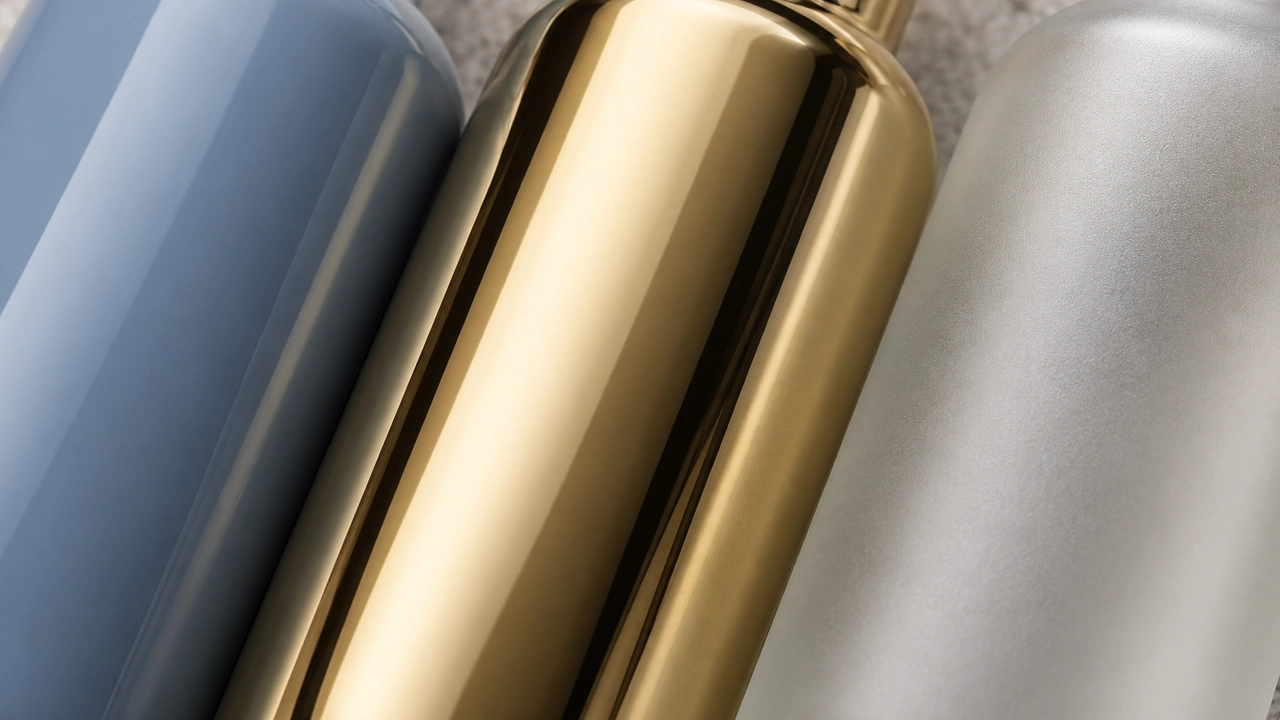
Each route builds the surface differently, so color range, content visibility and inspection points change with it; the full set is in the cosmetic bottle coating and finishing guide. At JeongwooCos, six decoration options are offered: frosted-look coating, color coating, vacuum metallization (PVD), printing, hot stamping foil and gradient coating.
| Criterion | Color coating | PVD metallizing | Frosted-look coating |
|---|---|---|---|
| Look and texture | Sprayed lacquer color finish, gloss or matte | Mirror metallic finish, metal vaporized in a vacuum chamber | Matte texture; check fingerprints and transparency on a sample |
| Color range | Check the proposed brand color on a sample; compare product lines | Mostly metal tones: chrome, silver, gold | Matte texture; check the actual color on a sample |
| Content visibility | Specify whether contents should show, then check a sample | Check how much the mirror finish obscures the contents | Check how clearly the formula color shows through |
| Combining with printing or foil | Ask whether printing or foil can be applied, and in what order | Logo position on the mirror surface, confirm on a sample | Confirm printing or foil on the selected matte sample |
| What to check at inspection | Color match to the approved sample, gloss uniformity | Mirror uniformity, scratches, stains | Matte uniformity, fingerprints, stains |
2. Which coating fits your formula and brand tone?
Define content visibility and the desired finish, then shortlist coatings. Follow the steps below to prepare sample approval.
- Write down the formula and its color, then decide whether the contents must stay visible or may be hidden (output: one-line visibility requirement).
- Define the desired gloss level and metallic appearance, then shortlist coatings (output: candidate list).
- For seasonal or color-coded lines, compare color and gradient finishes; for a metallic look, compare PVD (output: preferred coating).
- Ask the manufacturer to confirm the finishing combination and process sequence (output: finishing plan).
- Request a decoration sample, confirm color and texture on the real bottle, and keep the approved sample (output: approved sample and color reference).
3. How do you set a color reference and approve repeat orders?
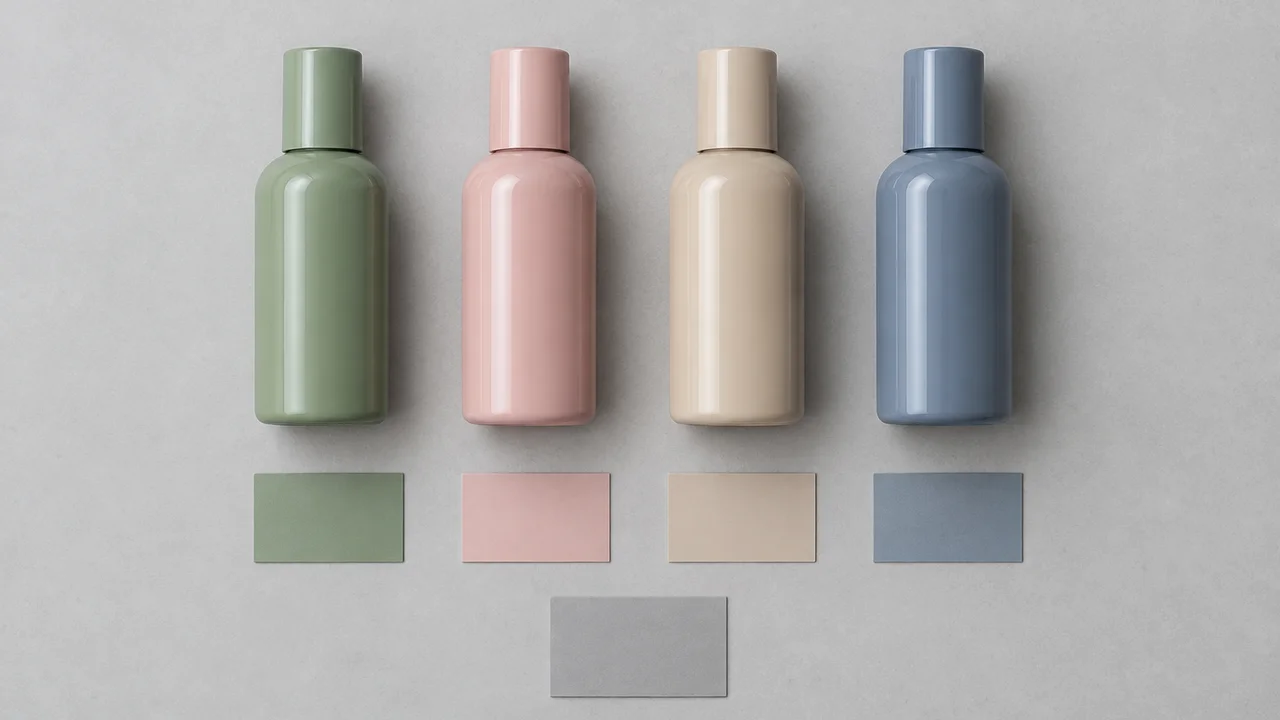
Use an approved sample and an agreed comparison method as the color reference. Ask the manufacturer to confirm the acceptance criteria at sample stage.
- Keep the approved sample on both sides and use it as the reference at re-order.
- Ask the manufacturer how the acceptable color deviation will be assessed at sample stage.
- Compare colors under one consistent light source.
- At re-order, place the retained reference and the new production sample side by side.
- Agree the surface appearance criteria, including gloss and matte texture, alongside color.
4. What should you prepare before requesting a coating quote or sample?
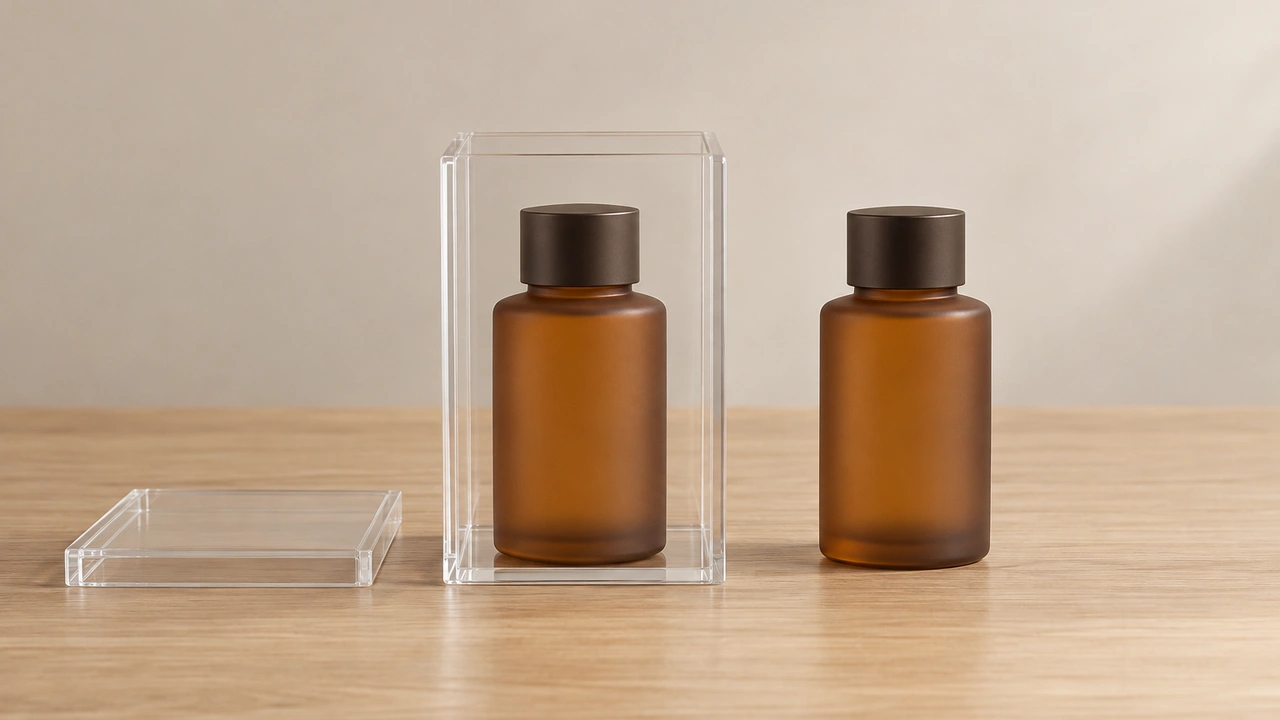
Send the formula, capacity, bottle shape and color reference, and ask for the quote and sample-review schedule. Standard lead time is about 30 days after sample approval and changes with the scope of decoration.
- Formula type and content color
- Capacity
- Bottle shape and closure
- Preferred coating and color reference (image or Pantone-style standard)
- Quantity
- Launch date
- Sample needed or not
- Logo artwork status and whether printing or foil goes on top
Sample types are in the sample policy; browse cosmetic glass bottles and jars that take these coatings, and read about JeongwooCos. If the bottle isn't fixed yet, start with what brands should decide before container production and the OEM first-order guide; photographs of each finish are in the decoration before-and-after comparison.
Frequently asked questions
How is frosted-look coating different from acid-etched frosting?
Acid-etched glass turns clear where fingers touch it; frosted-look coating keeps the matte texture and resists fingerprints, which is why it's common on skincare and fragrance bottles.
Which coating gives a mirror metallic finish?
PVD metallizing: metal vaporized in a vacuum chamber is deposited on the glass in chrome, silver or gold tones, suited to high-end lines.
Will the coating color match again on a repeat order?
Agree sample retention, acceptable color deviation and comparison lighting at sample stage. Record how repeat-order deviations will be assessed and handled.
Include your formula type, capacity, bottle shape, preferred coating and color, quantity, launch date and whether you need a sample. Request a sample or quote

