What Brands Should Decide First When Preparing Cosmetic Container Production
2026-05-01
A good container starts with the right specification, not only the right shape
When a brand prepares a new serum, ampoule, cream, or fragrance line, the first thing people notice is the package design. In actual production, however, the container has to match the formula, capacity, neck finish, accessory, finishing method, and sales channel. When these points are clear, sampling, quotation, and production planning become much smoother.
JeongwooCos helps brands review cosmetic glass bottles together with droppers, pumps, caps, and finishing options. The following checklist is designed for brands preparing their first container project or reviewing a new skincare line.
1. Start with the formula and how the product will be used
The same 30ml glass bottle can work very differently depending on whether it contains a serum, oil, toner, or ampoule. Low-viscosity formulas may require careful dropper or pump selection, while creams and balms often fit better in a wide-mouth jar. Usage amount, viscosity, filling method, and sensitivity to light or air should be reviewed before the bottle is finalized.
Before consultation: Instead of only saying “serum” or “ampoule,” share the formula viscosity, expected usage amount, and filling plan. This helps the manufacturer suggest a more practical container and accessory combination.
For more details, see the formulation guide.
2. Capacity also affects price positioning and sales strategy
Capacity is not only about volume. A 30ml container often works well for new product trials, high-concentration serums, and gift sets, while a 50ml container is suitable for full-size retail and repeat-purchase products. Online sales, offline display, and export channels can also influence the best bottle size and visual presence.
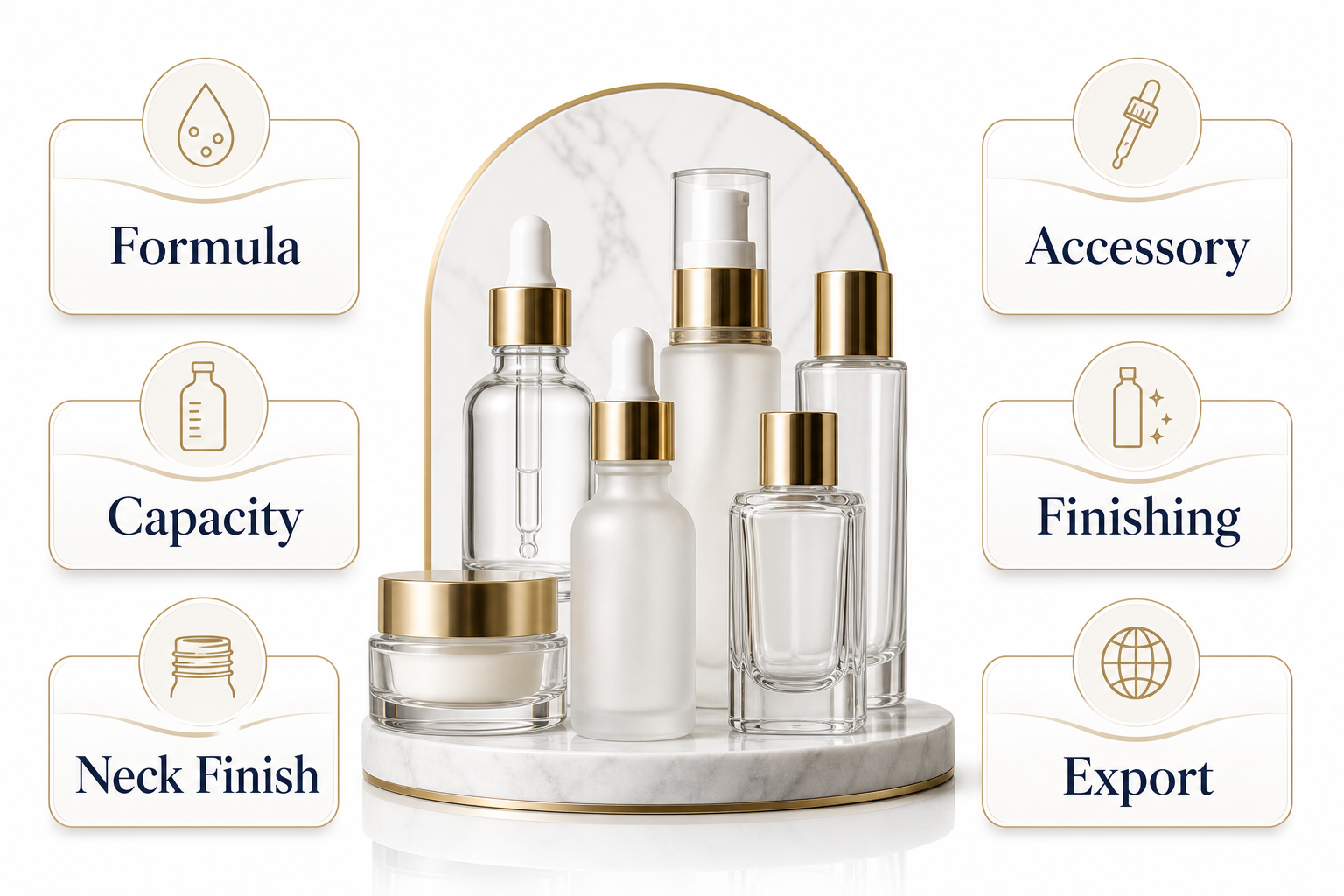
| Item | What the brand should define | Related page |
|---|---|---|
| Formula | Viscosity and use pattern: serum, ampoule, toner, cream, oil, or other formula | Formulation guide |
| Capacity | Trial SKU, full-size retail SKU, or premium line positioning | 30ml serum bottle, 50ml serum bottle |
| Neck finish | Compatibility with 18/415, 20/410, cap, pump, or dropper options | Accessory anatomy guide |
| Finishing | Clear glass, frosted finish, color coating, printing, foil, or other brand expression | Finishing guide |
| Schedule | Sample review, first-order quantity, lead time, and production transition plan | MOQ and lead time guide |
3. Review neck finish and accessories from the beginning
If the bottle body is chosen first and the dropper or pump is reviewed later, the options may become limited. Neck finish affects cap fit, leakage prevention, and user experience. For serum lines, dropper length and cap diameter matter; for pump lines, dosage and button feel should be checked with the actual formula.
For export-focused products, brands should also consider shipping vibration, temperature changes, and retail display conditions. Testing the selected container with the actual formula during the sample stage is the safest approach.
4. Glass containers support a premium skincare impression
For serums, ampoules, oils, and fragrances, the package strongly affects how customers perceive the product. Glass can show the color and clarity of the formula, while frosted coating, color coating, and metal accessories can create a premium skincare look.
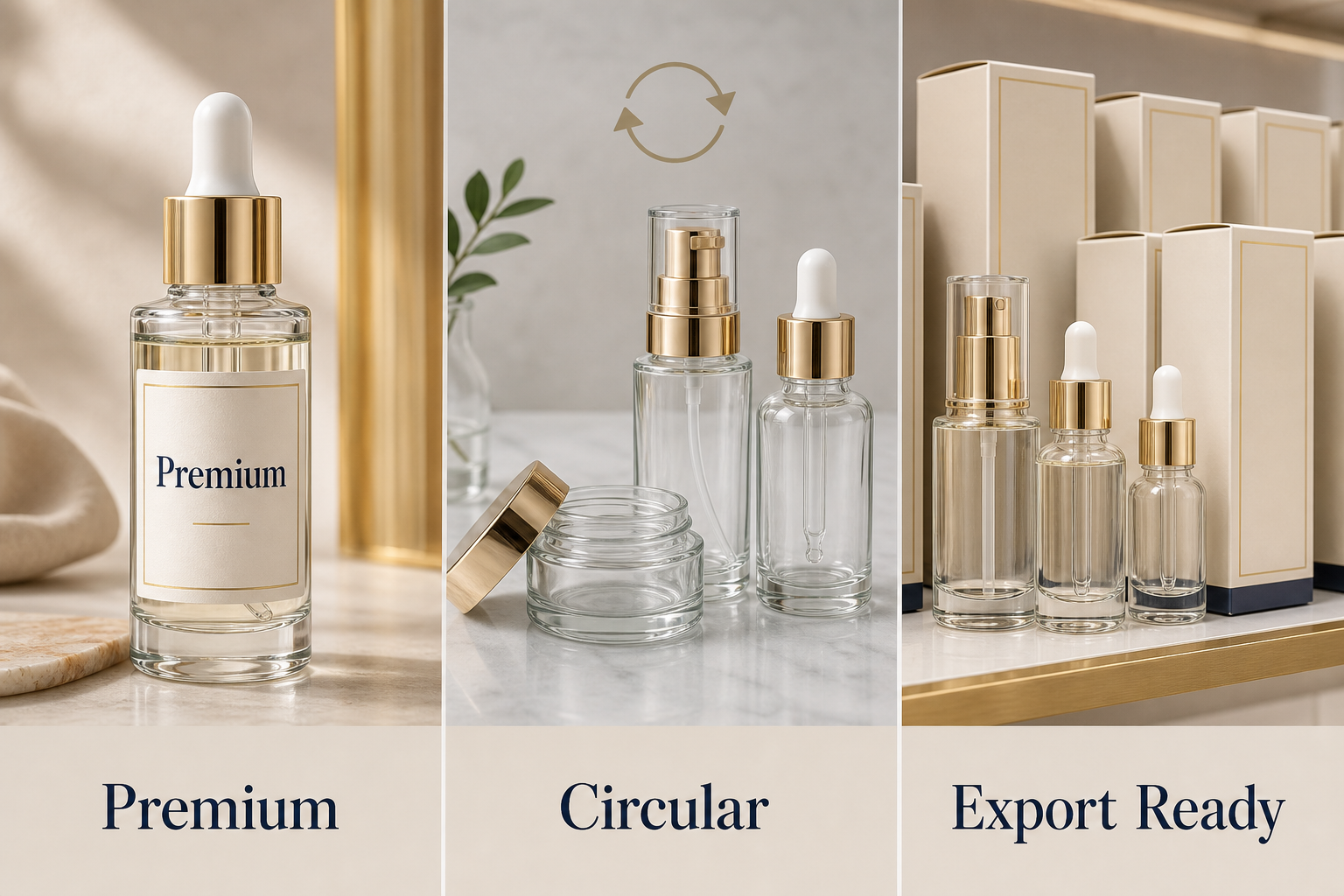
Still, glass should be selected according to the product concept and price point. Base thickness, shoulder shape, capacity, cap color, and printing method all work together to create the final impression.
5. A custom mold is not always the first step
For a first container project, it is often more efficient to review existing bottle families before moving into a fully custom mold. Brands can select a suitable capacity, neck finish, and accessory combination first, then apply finishing options that match the brand identity. This can reduce early cost and shorten the review process.
- 01S30-02 30ml serum/dropper bottle: suitable for new product testing, ampoules, and serum lines
- 01S50-04 50ml dropper bottle: suitable for full-size serum and functional skincare lines
- 01J50-02 50ml cream jar: suitable for creams, balms, and higher-viscosity formulas
- 01P50-01 50ml fragrance pump bottle: suitable for fragrance and mist product planning
6. Export and sustainability requirements can change the specification
More brands now review label space, logistics stability, recyclability, and refill usability before production. The glass body is only one part of the package. Caps, pumps, labels, and coating methods also affect usability and end-of-life handling.
This cannot be solved only by using the word “eco-friendly.” Brands need to check which accessories are used, whether refill or repeated use is part of the concept, and whether the finishing choice supports both brand image and responsible packaging communication.
Summary: prepare six points before requesting a container quotation
Before starting cosmetic container production, organize these six points first: formula, capacity, neck finish, accessory, finishing, and sales channel. Once these are clear, sampling, quotation, and production schedules can be discussed more realistically.
If you are reviewing glass containers for serum, ampoule, cream, or fragrance products, contact JeongwooCos to discuss bottle families, accessories, and finishing options.

