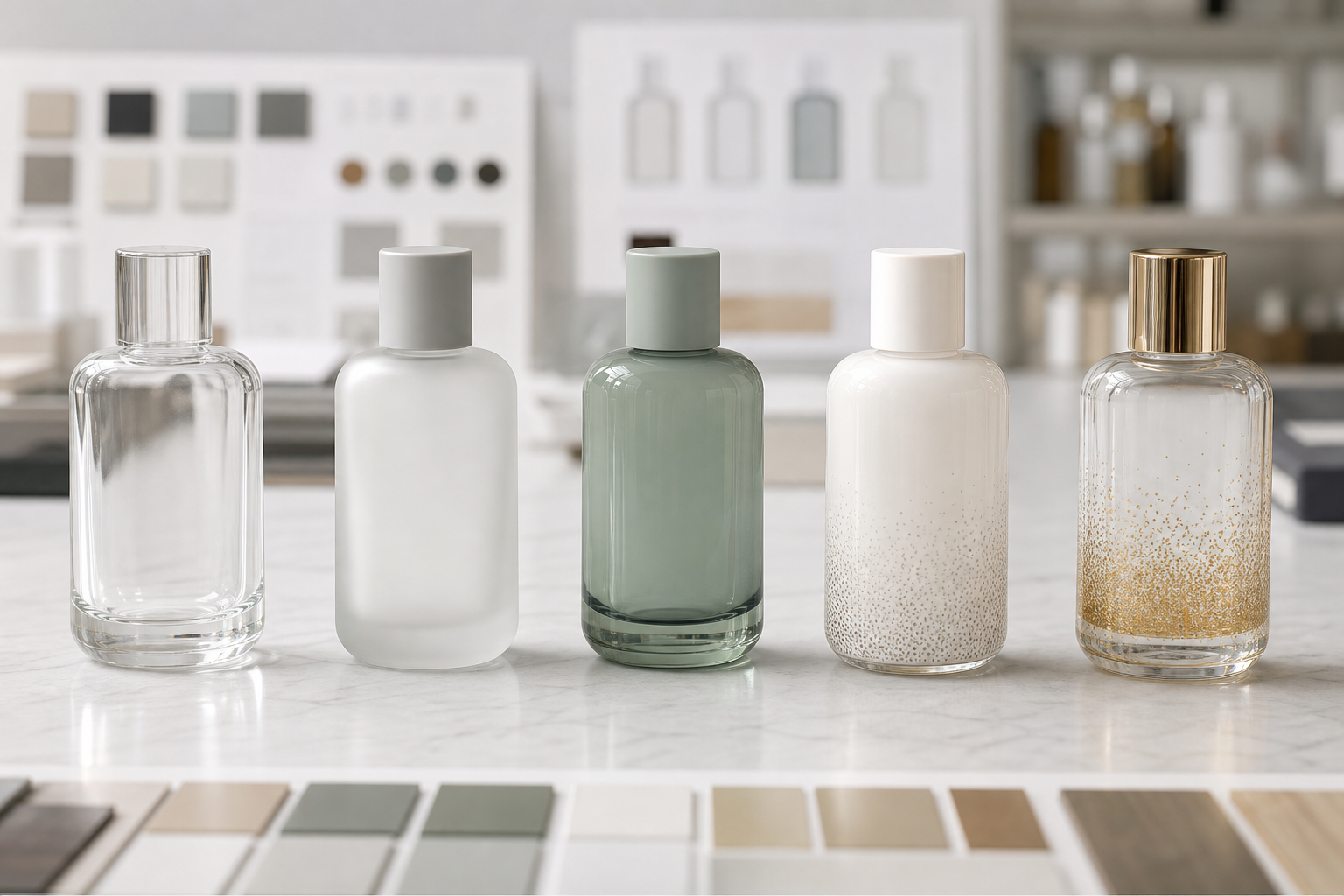
Finishing changes how a cosmetic glass container is perceived
For cosmetic glass packaging, finishing is not a decoration added at the end. It affects price position, formulation impression, product photography, shelf presence, and the way a buyer understands the brand. The same bottle can feel clean, soft, premium, or expressive depending on transparent glass, frosting, color coating, printing, and hot stamping.
When asking JeongwooCos about finishing, share the formula, capacity, brand tone, logo file, sample review schedule, and launch target together. This article explains how to compare before-and-after finishing samples before deciding.
Finishing should be reviewed during sampling together with formula, component color, logo file, and brand tone.
1. Compare the clear bottle and the finished sample side by side
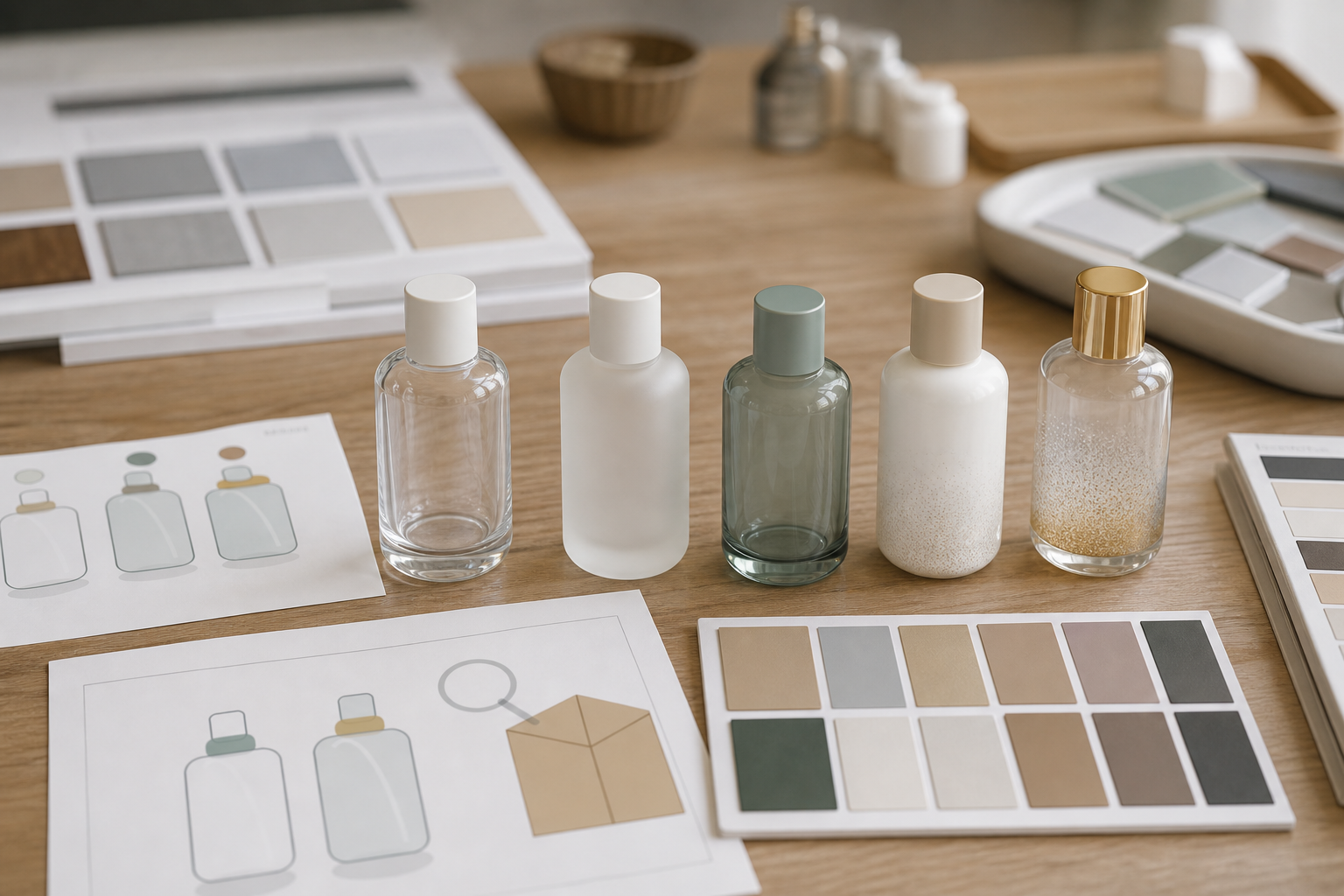
The first step is to see the before-and-after difference on the same container. Clear glass shows formula color and a clean impression. Frosting or coating changes surface texture and gives a more premium impression. Product photography, online detail pages, and retail lighting should all be considered.
If the first-order process is already clear, use this step to decide whether the finishing direction supports the actual product concept.
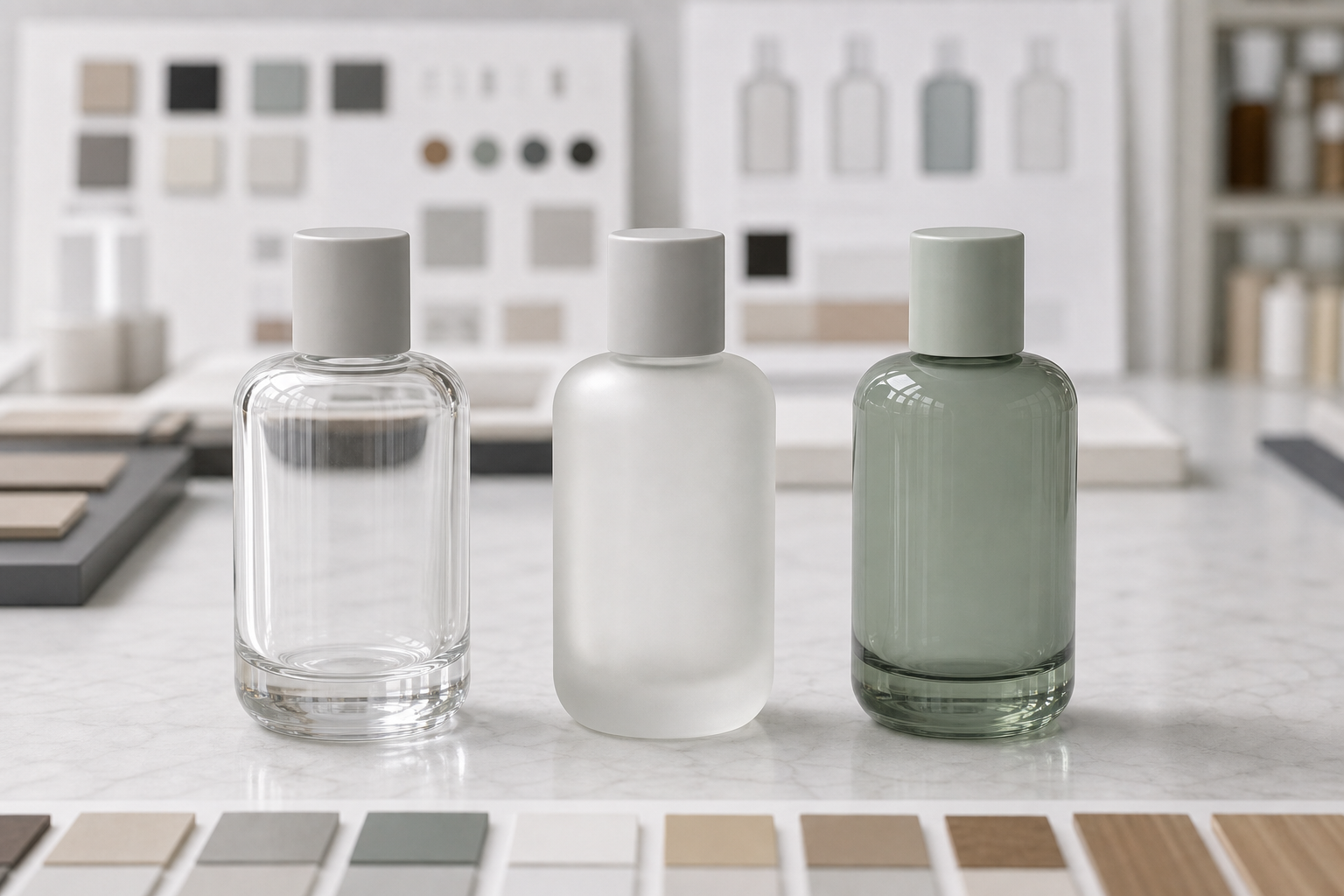
2. Frosting creates a soft premium texture, but formula color should be checked
Frosting gives glass a softer, more premium surface. It works well for serum, ampoule, and cream lines with a minimal brand tone. If formula color is important, check how frosting affects color visibility and light transmission on the sample.
Cap, dropper, and pump colors should be matched together with frosted glass. Component selection should not be separated from the bottle surface.
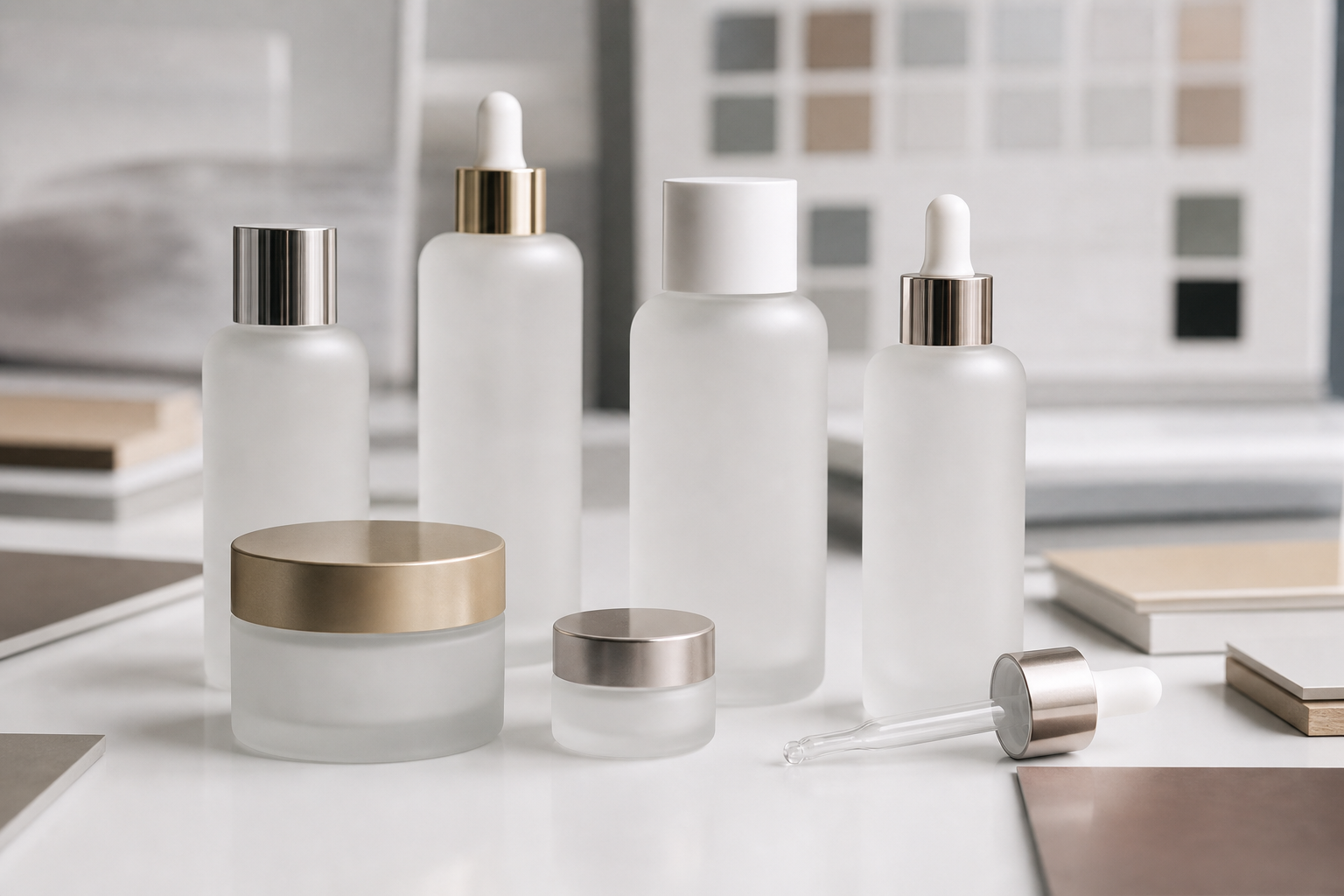
3. Color coating and gradients help separate product lines
Color coating can carry a brand color across the whole container, while gradient finishing can separate fragrance, mist, or skincare lines by mood. However, screen colors and real coated glass can look different. Sample review is the right place to check color tone, evenness, and matching with accessories.
| Finishing | Brand tone | Sample check |
|---|---|---|
| Clear glass | Clean, formula-focused | Formula color and label area |
| Frosting | Premium, minimal | Surface evenness and logo contrast |
| Color coating | Brand color, product line separation | Color variance and accessory matching |
| Gradient | Fragrance, mist, expressive line | Density shift and photo result |
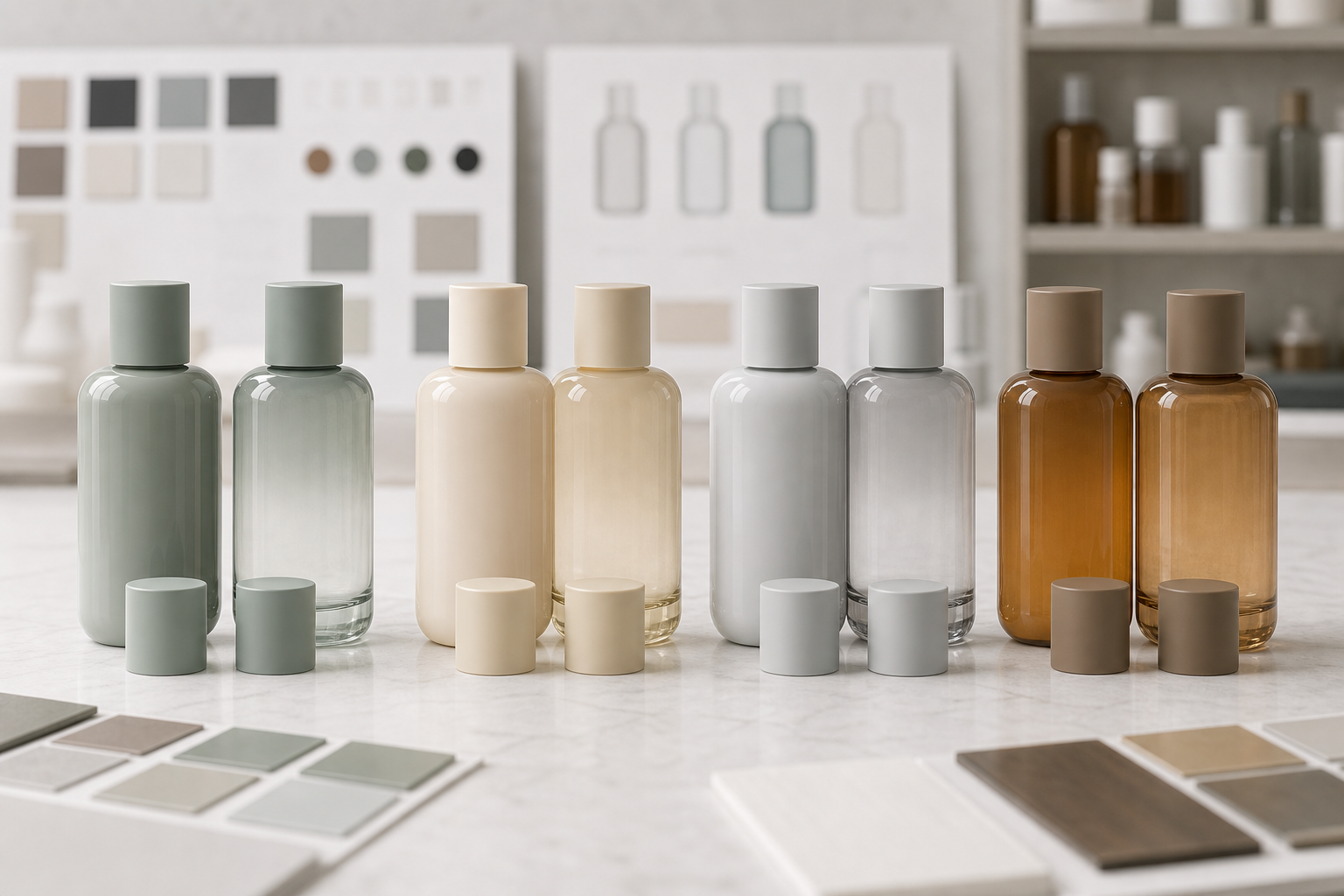
4. Printing and hot stamping depend on logo files and position standards
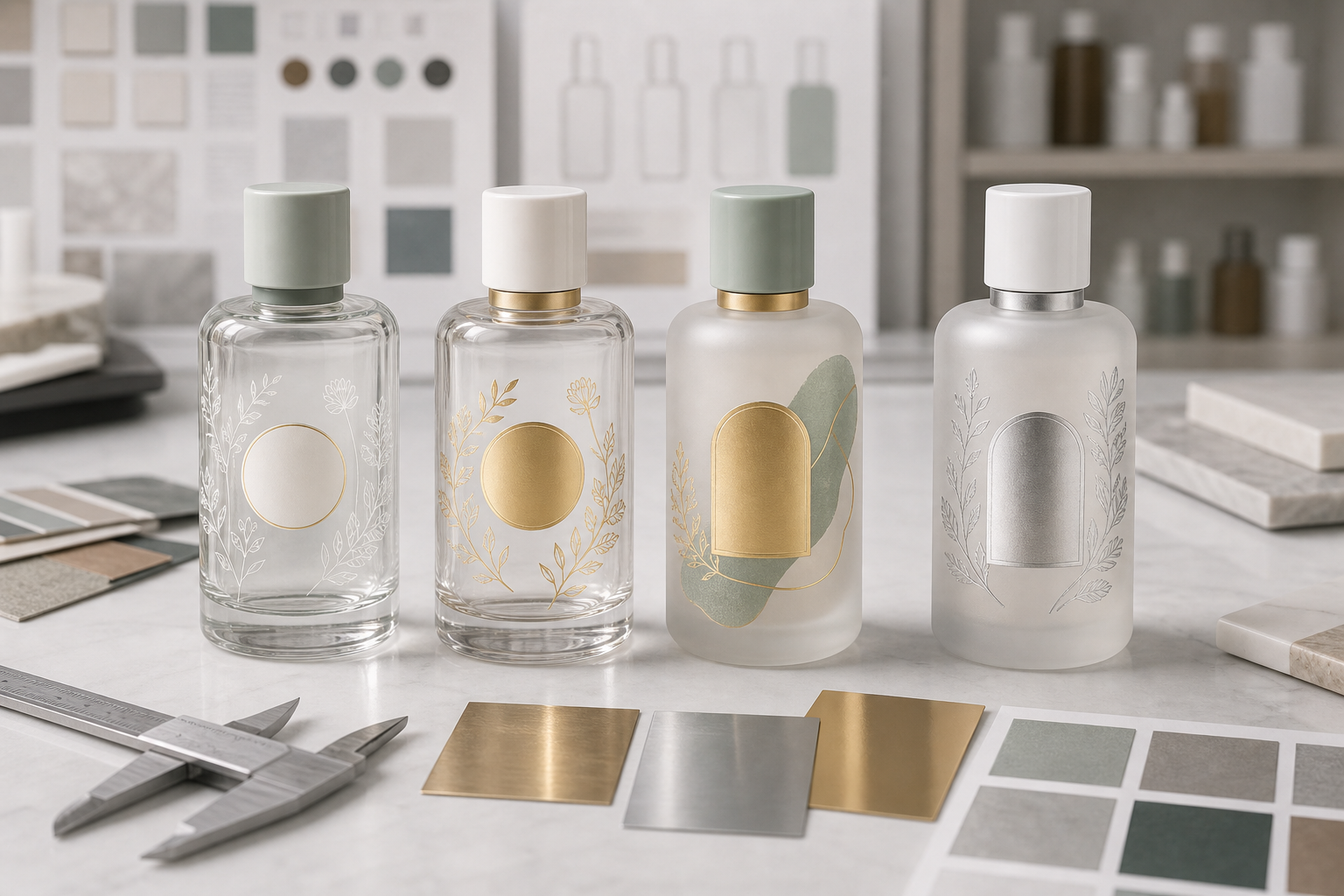
Printing and hot stamping place the brand directly on the glass. During sampling, check logo clarity, position tolerance on curved surfaces, color density, and metallic point adhesion. A flat logo file may look different on a curved bottle, so the file and target position should be shared early.
5. Prepare formula, capacity, logo file, and sample schedule before inquiry
To make the finishing discussion concrete, send formula type, target capacity, bottle shape, glass color, preferred finishing, logo file availability, and sample review schedule together. JeongwooCos can review frosting, color coating, PVD, printing, hot stamping, and gradient options together with the product family.
- Formula type and target fill capacity
- Preferred bottle image or product page link
- Finishing option: frosting, color coating, printing, hot stamping, or undecided
- Logo file availability and print position
- Sample quantity and review schedule
- Expected first production quantity and launch month
If you need cosmetic glass container finishing samples, contact JeongwooCos through Contact with formula, capacity, glass color, finishing option, logo file, and sample schedule.

